




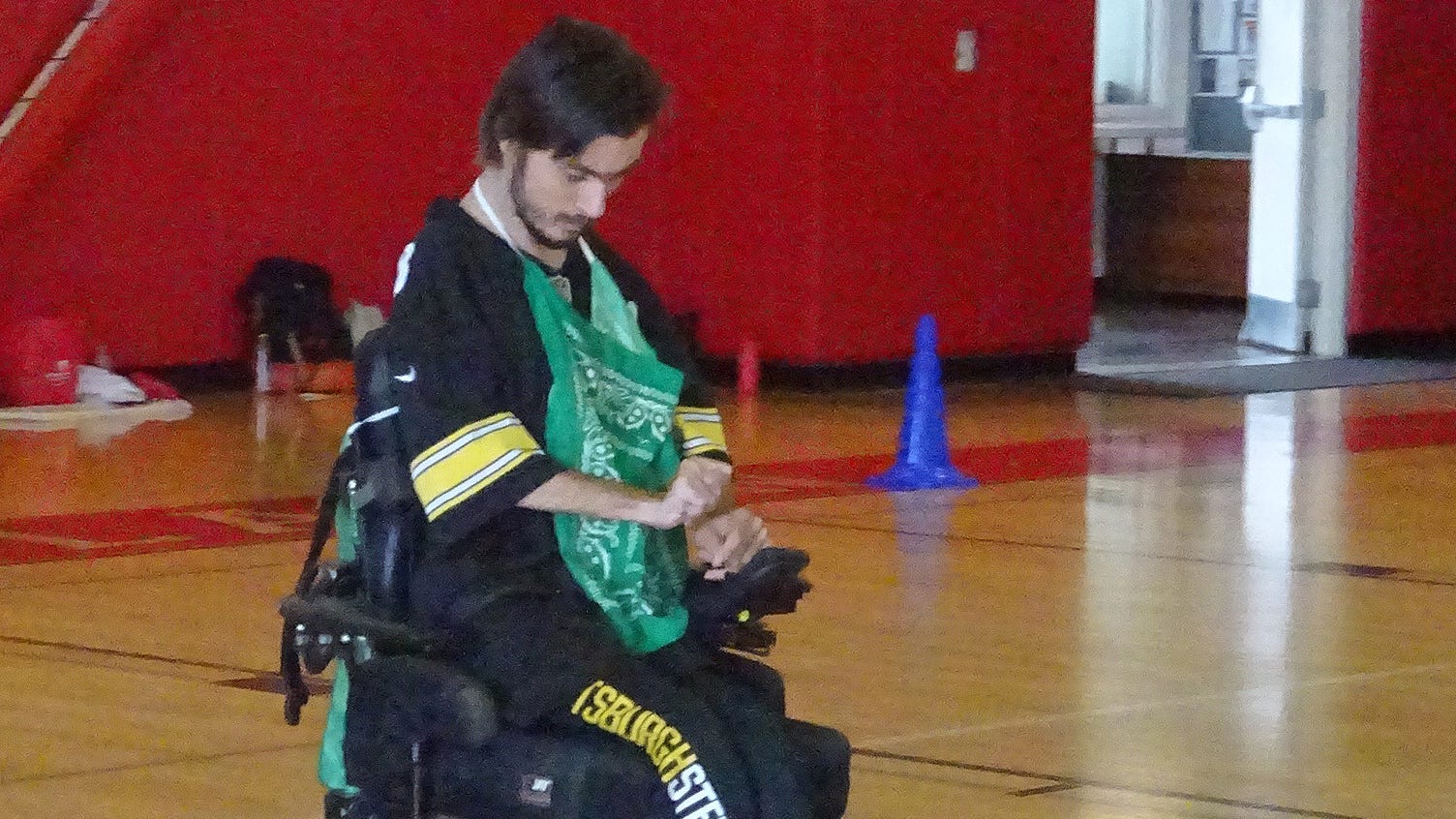

New Jersey Power Red Bulls play soccer using wheelchairs: Video
The New Jersey Power Red Bulls, a soccer team for wheelchair users, held its monthly practice on Sept. 8, 2024 at the Fair Lawn Community Center.
- There are a few disabilities where heat is just a killer and people don’t always realize it until it’s too late.
- ‘People don’t die from heat just because it’s hot. They die because they have no way to cool down.’
- There are hacks often used in the disability community: Portable fans, misting devices, frozen towels, and spray bottles are some ways to get through a hot day.
As summer temperatures soar across New Jersey, people who use wheelchairs and others with disabilities face mounting health risks, made worse by poverty, isolation and a patchwork of inaccessible cooling options.
“There are a few disabilities where heat is just a killer and people don’t always realize it until it’s too late,” said Edison’s Javier Robles, 58, a disability activist and Rutgers professor who uses a power wheelchair.
Robles has faced these problems since an accident paralyzed him at 16. Growing up in Newark and Elizabeth, he lived in buildings without central air and window air conditioners weren’t allowed or affordable.
“Most of my life, it was just a fan,” he said. The concrete apartments of his childhood stayed hot.
The spinal cord injury made cooling down more than a matter of comfort. He couldn’t regulate his body temperature or sweat — critical for keeping cool.
People with spinal cord injuries are at greater risk of heat illness, according to the Christopher & Dana Reeve Foundation.
Robles adapted. He kept ice, cold towels, and frozen water bottles close at all times. The pools he once used for relief were inaccessible, and cooling centers are often out of reach for people with disabilities who rely on public transportation.
The hidden risks of wheelchairs and heat
Power wheelchairs add another challenge: their black frames absorb heat, and their foam cushions trap it. Wetting the seat to stay cool isn’t an option either, as wet seats can lead to mold, skin irritation or the need to replace an expensive cushion.
“There are just so many barriers to something as basic as cooling your body down,” Robles said.
Life is better these days. Robles can afford a house with air conditioning. But that doesn’t mean summer’s risks have gone away.
Even with air conditioning, Robles must remain vigilant due to his inability to regulate his body temperature. And accessibility problems still persist during the dog days of summer.
“If I don’t have a cold spray bottle when I go to the beach, or some ice water to drink and cool myself down, I could go into something called autonomic dysreflexia,” Robles said. “That’s when your blood pressure shoots up. It can lead to a stroke. It’s not just uncomfortable. It’s life-threatening.”
Robles also highlighted the inherent risks of wheelchairs themselves. His chair is black, the most common color for electric wheelchairs, and its surfaces become hot to the touch.
“If you have a black chair, you’re just absorbing the sun,” he said.
Manual chairs typically have lower backs and allow for more circulation, but they’re not feasible for everyone. People with more severe injuries or balance issues don’t have that flexibility. He sometimes wets down his chair, with his wife carefully drying it afterward.
“There are so many little quirks,” he said. “If you forget to cover your cushion or you don’t dry it out properly, you could end up with sores or have to buy a new one.”
A 2021 study in Frontiers in Bioengineering and Biotechnology noted that heat and moisture can significantly increase the risk of pressure injuries in wheelchair users.
Solutions without accommodations
State and local governments often respond to extreme heat with cooling centers. While New Jersey maintains a list of designated cooling centers through resources like NJ 2‑1‑1 and Heat Hub NJ, these listings focus on location and hours — not wheelchair ramps, accessible restrooms or other ADA-required features. Accessibility information is inconsistent or absent online. This forces people with disabilities to check libraries, senior centers, community centers and police departments for themselves.
A lot of New Jersey isn’t on an accessible transit route, Robles said. “So if the only cooling center is across town or at a mall and you don’t have transportation, you’re not going. If you’re on a fixed income, you’re not paying for an Uber just to stay cool for a day.”
Most lake communities — often bowls carved out of hillsides — are inaccessible by their nature. What’s more, they largely exist in rural and suburban areas out of reach of mass transit.
According to a 2004 study, 91% of people living in areas like Bergen, Essex, Camden, Hudson, Passaic and Union counties live within the reach of Access Link NJ Transit’s disability transportation service. But more rural counties like Somerset (8%), Sussex and Warren had little to no service at that time, stated the Voorhees Transportation Center. There’s been no improvement since the study, Access Link documents show.
That makes the Jersey Shore a better bet, and while some shore towns like Asbury Park and Belmar have installed access mats that allow wheelchairs to roll over the sand and down to the water, options vary widely from town to town and year to year.
Robles recalled a recent trip to Seaside Park where he asked about beach access mats.
NJ’s most accessible beaches
“They said no, they didn’t have mats,” he said. “They offered me a beach wheelchair. But that only works if you have someone to lift you into it. You have to have that all figured out before you even get on the beach. There are so many impediments to just cooling your body down for a day.”
While inaccessible beaches kept Verona’s Scott Chesney away from the ocean for years, a solution arrived in 2004 in Asbury Park, where he came across a beach wheelchair that had pontoons for armrests. They keep the chair afloat in the ocean.
Website Wonders Within Reach maintains a list of list of the most accessible beaches in the U.S., including several in New Jersey and New York.
For people living in poverty — disproportionately people with disabilities — the risk is magnified. Even in apartments where air conditioning is allowed, it isn’t always affordable.
“A lot of disabled people can’t afford to run it because the electric bill is too high,” he said.
Utility assistance programs can help offset the cost of running an air conditioner.
“People don’t die from heat just because it’s hot,” Robles said. “They die because they have no way to cool down.”
Do-it-yourself survival
There are hacks often used in the disability community: Portable fans, misting devices, frozen towels and spray bottles are some ways to get through a hot day.
“I used to take a small cooler filled with ice and wet towels, and I’d use that to cool my body down,” Robles said. “Spray bottles from the dollar store, frozen water bottles, asking for free ice at Starbucks — it sounds small, but those things can save your life.”
He’s also seen people create DIY air conditioners using coolers, tubing and a battery-powered fan — a low-cost solution that has gained traction in disability groups online.
“It’s not fancy, but it works,” he said. “Sometimes it’s all you’ve got.”
link
More Stories
Preparing a “Landing Pad”: Mitigating OBBBA’s Harms to the Medicaid Safety Net
Adults with Intellectual and Developmental Disabilities Face Critical Mental Health Care Gaps, New Study Finds
Alabama Neurodevelopment Center aims to boost mental health resources in Birmingham, the state