



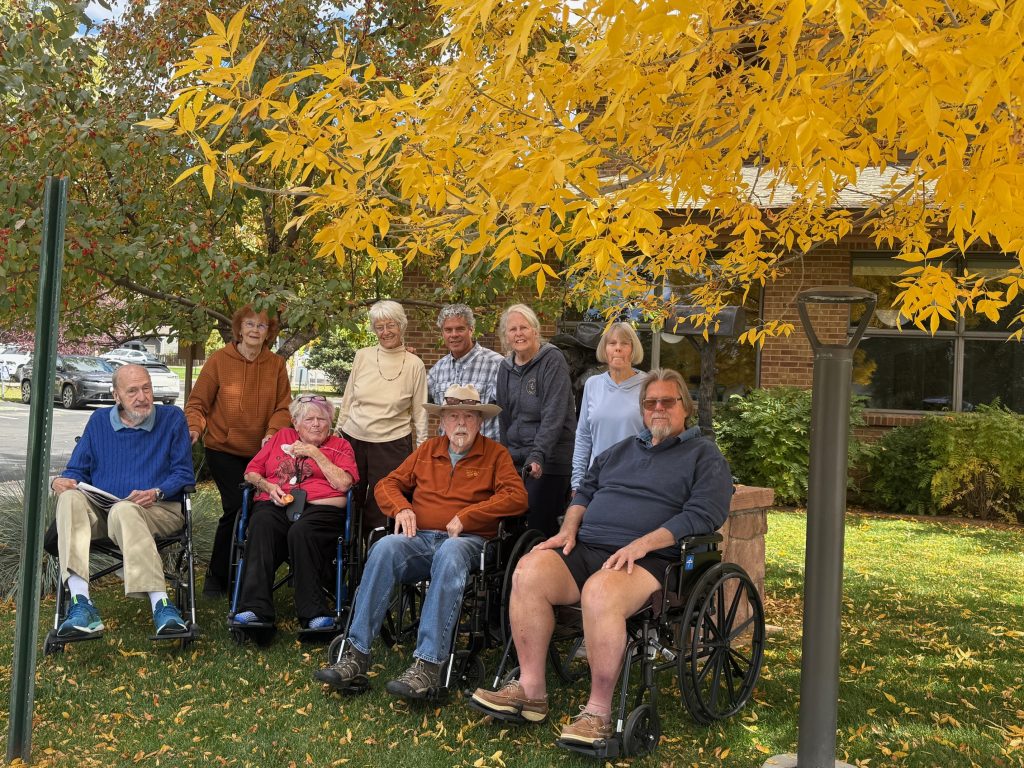
Caregiver Connections/Courtesy photo
Vail Health is increasing its support for the nonprofit Caregiver Connections in 2026 to allow the organization to offer more intentional care for Eagle County seniors.
Eagle County has the second-highest life expectancy of any county in Colorado — 91.4 years — according to Vail Health’s 2025 Community Health Needs Assessment. Between 2010 and 2020, Eagle County’s senior population grew by 125%, and is poised to continue to grow.
Founded in 2011 by family caregivers who recognized the need for quality care for aging adults in Eagle County, Caregiver Connections offers services to help older adults age in place by supporting their family caregivers.
The organization operates with three full-time individuals totaling 1.5 full-time employees.
“We are one of those small but mighty nonprofits,” said Samantha Hodgkins, Caregiver Connections’ executive director.

Caregiver Connections’ offerings include weekly services at the Senior Spot in Eagle, where older adults with cognitive and/or physical declines can come for curated social, physical and mental stimulation through lunch, music, games and crafts. This gives their family caregivers a block of respite so they can take care of themselves.
The county’s nonprofits, for-profit businesses, Vail Health and the county government have teamed up to provide more services for the aging population, from Eagle County’s Healthy Aging Roadmap Advisory Council to a group of 30 to 40 organizations that work together.
“While we know we’ve got work to do in the longer-term, and that is underway and it is happening, we are plugging those holes and filling those gaps and doing the hard work, the blood, sweat and tears around wrapping arms around our community and trying hard to not let anybody slip through the cracks,” said Amy Lavigne, Vail Health’s vice president of quality. “That’s what I see and feel, that feels maybe different than what we had five years ago.”
Assessing the Vail Valley’s health needs
Vail Health conducts a Community Health Needs Assessment every three years. The recently completed 2025 assessment, available on Vail Health’s website, contains a review of Eagle County’s population health, with data collected through demographics and focus groups. This year’s assessment showed that 15.5% of Vail Health patients are over 60, up from 13.5% in 2022.
Trust what you read. Stay informed with us.
Sign up for daily or weekly newsletters at VailDaily.com/newsletter
To receive feedback for the assessment, Vail Health held seven focus groups, including two older adult-specific discussions.
“We really made sure that we got that older adult voice in our CHNA,” Lavigne said.
The organization heard feedback that the health system should prioritize an “equitable approach to care,” Lavigne said. “An older adult isn’t just an older adult. They come with their own set of needs and experiences that impact the way we care for them.”
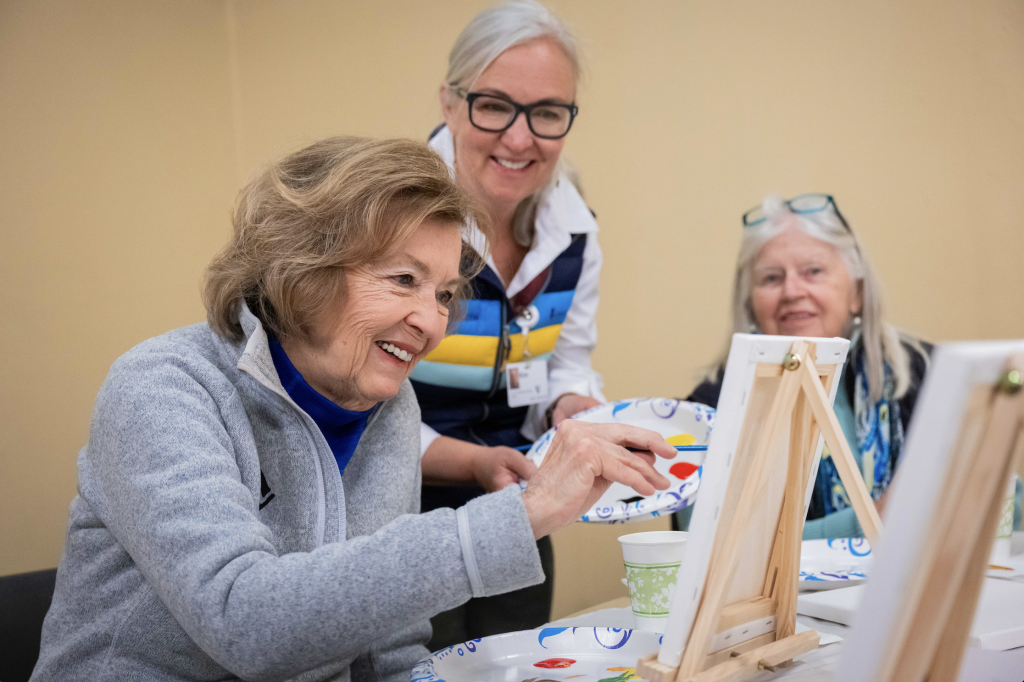
As a diverse population, Eagle County’s older adults have disparate needs that require an array of specialists.
Older adults said they were “willing to get creative with (how they) access (care), as long as we made it as easy as possible for them to do that,” Lavigne said.
“Eagle County and Vail Valley have a perception and a reputation of active, healthy aging for older adults, and that’s absolutely true — the cyclists, the skiers, the hikers — and that’s wonderful, and they are also never more than a diagnosis or an accident away from a condition, an injury, a diagnosis that can change the trajectory of an older adult’s life and their family members and their support systems around them, as well,” Hodgkins said.
How Vail Health, Caregiver Connections have evolved care
As Eagle County’s senior population has grown, Caregiver Connections has added care consultations, a medical supply closet with equipment to be loaned to community members, an aging well speaker series, Parkinson’s and dementia and memory loss support groups for caregivers, a caregiver support fund that provides short-term financial assistance and a caregiver classifieds group to pair those seeking caregivers with those looking for caregiving work.
“The expansion of our programs and services has really been directed and led by the needs in the community, by what we see and feel on the ground and by … the gaps that are here for our older adults,” Hodgkins said. “Gaps not because people don’t want to do it, but because the growth (in the older adult population) has been so fast.”
Caregiver Connections plans to double the impact of its respite programming in 2026, adding two days per week at a midvalley location in Avon on top of the two days per week the Senior Spot already operates in Eagle. The increase in service will be funded primarily by Vail Health.
“The financial support that we get from Vail Health enables us and equips us to be able to do the direct personal work that is so meaningful to people, whether that’s expanding the Senior Spot respite program or offering the medical supply closet,” Hodgkins said.
Vail Health has built out several of its existing programs to address older adults more specifically. Its trauma prevention program now gives fall prevention education to anyone 65 and older who comes to the emergency room after a fall. Vail Health has partnered with Eagle County Paramedic Services’ community paramedics for a warm handoff following the discharge of older patients from inpatient care. Operators on Vail Health’s behavioral health service line are receiving training on handling calls about patients experiencing both dementia and behavioral health concerns.
Vail Health has also launched an “age-friendly health system” program, endorsed by the Centers for Medicare & Medicaid Services and the Institute for Healthcare Improvement, which focuses on health-related concerns for older adults.
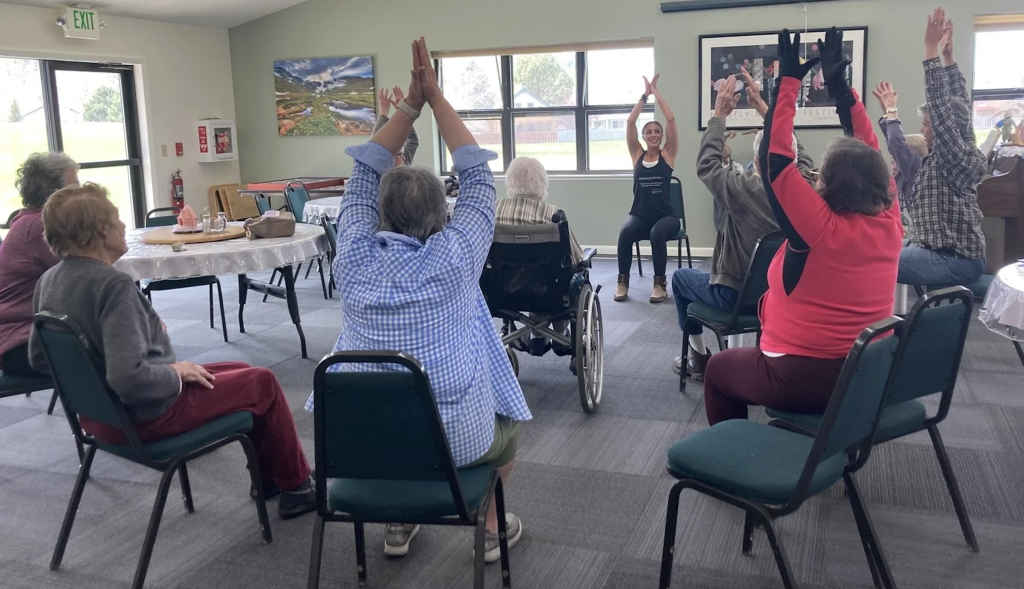
Vail Health and Vail Health Behavioral Health are Caregiver Connections’ biggest funders, as family caregivers can often experience feeling isolated, depressed, lonely or overwhelmed.
“What people don’t always notice or pay attention to outside of the physical demands are the mental and emotional conditions, both with aging and with caregiving,” Hodgkins said. “Thirty to 40 percent of the folks we’re serving are the adult caregivers, who are not older themselves.”
“As the valley continues to grow multigenerationally, we’re seeing more of that, particularly and especially in the Hispanic and Latino community, that’s absolutely the case,” Hodgkins said.
Caregiver Connections has been focusing on increasing its outreach to the Hispanic/Latino community. “We now have all of our materials in bilingual collateral and content, we have a board member who is Spanish-speaking (and) are hiring and staffing for that bilingual services lead,” Hodgkins said.
The final speaker event of Caregiver Connections’ 2025 aging well speaker series is scheduled for Thursday at Colorado Mountain College and will showcase resources throughout the county for healthy aging. The event will also serve as a celebration of caregivers, as November is National Family Caregivers Month. Refreshments and pampering for caregivers will begin at 4:30 p.m. and the panel will begin at 5 p.m.
“It’s really about recognizing, just as we would for our health care professionals and others, those people who are on the front line of loving, caring, serving and being there for their loved ones,” Hodgkins said. “The real takeaway of the evening is, ‘thank you, caregivers.’ We see you, we recognize you, we know that what you do is not acknowledged and not known in many cases. ‘Thank you for the steadfast and dedicated love that you show your family members.’”
link
More Stories
Banks are becoming bulwarks against scams for vulnerable seniors | Lifestyle
California Spends $300 Million a Year Incarcerating Older Women
New ‘care home’ for seniors aims to bring alternative to home health care