



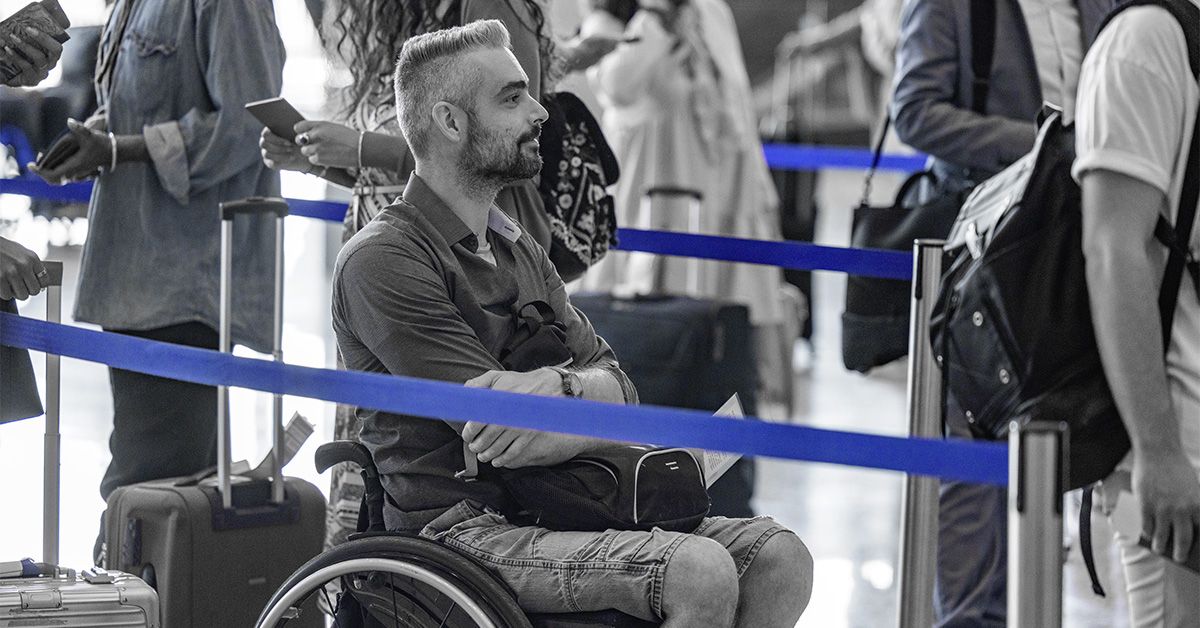
People with visible health conditions or disabilities can still travel and go on vacation, although the process may involve a little more planning and preparation.
Before traveling, people can research their chosen destination to plan the most suitable activities, accommodations, and transport methods.
According to the Air Carrier Access Act (ACAA), it is illegal for airlines to discriminate against passengers due to disabilities. This law applies to all flights to and from the United States.
- treatment with dignity and respect
- information about aircraft capabilities, limitations, and services
- any information in an accessible format
- assistance at airports
- accessible airport facilities
- assistance on an aircraft
- travel with a service animal or assistive device
- accessible aircraft features
- seating accommodations
- resolution of a disability-related issue
The U.S. Department of Transportation is responsible for upholding and enforcing the ACAA. If an airline discriminates against someone due to a disability, the person can submit a complaint to the Office of Aviation Consumer Protection (OACP).
When traveling, disability rights vary from destination to destination. Planning ahead can help people understand what to expect and how to prepare for their accessibility needs.
Visible health conditions that are not a disability
Some visible health conditions do not qualify as a disability but may still cause anxiety and difficulties when traveling. If this is the case, people may benefit from speaking with their airline before traveling to understand what steps they can take to make the process easier.
For example, people can inform an airport transport security administration (TSA) officer of their medical condition before security screenings.
The following questions may help people with health conditions when booking their vacation transport:
- Will there be opportunities and facilities in which to rest? How long will the journey take?
- Will there be any restrictions on mobility while traveling?
- Can the method of travel support adjustments and accommodations? For example, will an airline provide a ramp for wheelchair access?
- Is it possible to access necessary medications throughout the journey?
- What additional documents or supportive devices might be necessary for the journey?
- Does the airline or transport organization offer any additional support or resources for people with medical conditions?
Going through airport security with a visible health condition
The TSA recommends that people with a disability or medical condition speak with a TSA officer before checkpoint screenings. Although all passengers require screening, airport staff may be able to make accommodations.
TSA PreCheck lanes can screen passengers without the need to remove items such as shoes and light jackets, which may help people with mobility issues.
If available, people may also be able to request screening using a body scanner machine, also called advanced imaging technology (AIT).
If AIT is unavailable or someone does not want to use it, a TSA officer of the same sex as the passenger may screen them using a pat down.
To make airline screening easier, people may benefit from bringing documentation of their medical condition or using a TSA notification card.
Laws on accessibility and discrimination vary worldwide, which can affect a person’s experience traveling with a medical condition. Planning ahead is vital to ensure someone knows what to expect and how to manage potential issues.
The following tips can help someone manage barriers to accessibility when traveling:
- Review local laws and regulations about accessibility and disability discrimination.
- Find and contact local disability organizations if they are available. They may be able to offer support and contacts for a person’s trip.
- Research accommodation options and how each one supports people with disabilities or health issues. This may involve speaking with hotel or resort staff before making a booking.
- Consider what assistive devices, equipment, or medication is necessary to take and how to access it when traveling to a holiday destination.
- Learn whether current medical insurance covers travel and how to access potential medical care at a holiday destination.
- Discuss current medications with a healthcare professional before traveling, particularly if traveling to a new time zone or altitude or if medications require refrigeration.
- Research tourist organizations to see if any specialize in experiences for people with accessibility needs.
- Listen to bodily cues when traveling. People can plan opportunities to rest and meet their health needs throughout the day.
Language barriers
Language barriers when traveling can make it even more challenging to communicate health needs.
As well as the practicalities of traveling with a visible health condition, people may experience social challenges, such as people staring or asking uncomfortable questions, which could cause feelings of anxiety, depression, or low self-esteem.
The following tips may help someone manage these challenges:
Health conditions should not restrict a person’s travel experiences. Anyone experiencing mental health difficulties due to their health condition can speak with a healthcare professional for more help.
Joining a support group or community with the same condition can also help someone overcome insecurities and regain the confidence to have the same experiences as someone without their condition.
Traveling with a health condition or disability may pose unique challenges, but people can typically overcome these by planning ahead and anticipating their potential needs.
Disability and accessibility laws vary worldwide. Planning ahead can help people choose the most suitable travel destination and anticipate the challenges they may face when on vacation.
Healthcare professionals can also help people with a health condition or disability plan how to stay well and safe on their trip, including potential changes to current treatments and accommodations they may need.
link
More Stories
Preparing a “Landing Pad”: Mitigating OBBBA’s Harms to the Medicaid Safety Net
Adults with Intellectual and Developmental Disabilities Face Critical Mental Health Care Gaps, New Study Finds
Alabama Neurodevelopment Center aims to boost mental health resources in Birmingham, the state