


Special Olympics Health Messengers advocate for more inclusive health care for those with developmental and intellectual disabilities.
MAINE, USA — Recent studies by the Urban Institute show that over 40 percent of people with special needs in the United States struggle to get the health care they need.
People with developmental and intellectual disabilities are more likely to face health problems such as diabetes and depression, experts say.
A group of Special Olympics Maine athletes is encouraging healthy habits in their communities and urging health care providers in Maine to make care more welcoming for people with developmental and intellectual disabilities.
Della Lippinotti is learning how to advocate for herself when she sees the doctor.
“I may not be able to come right out and tell them that I have a high tolerance to pain,” Della explained.
Della is one of about a dozen people in Maine with developmental and intellectual disabilities who are learning to live healthier lives through the Special Olympics Health Messenger program.
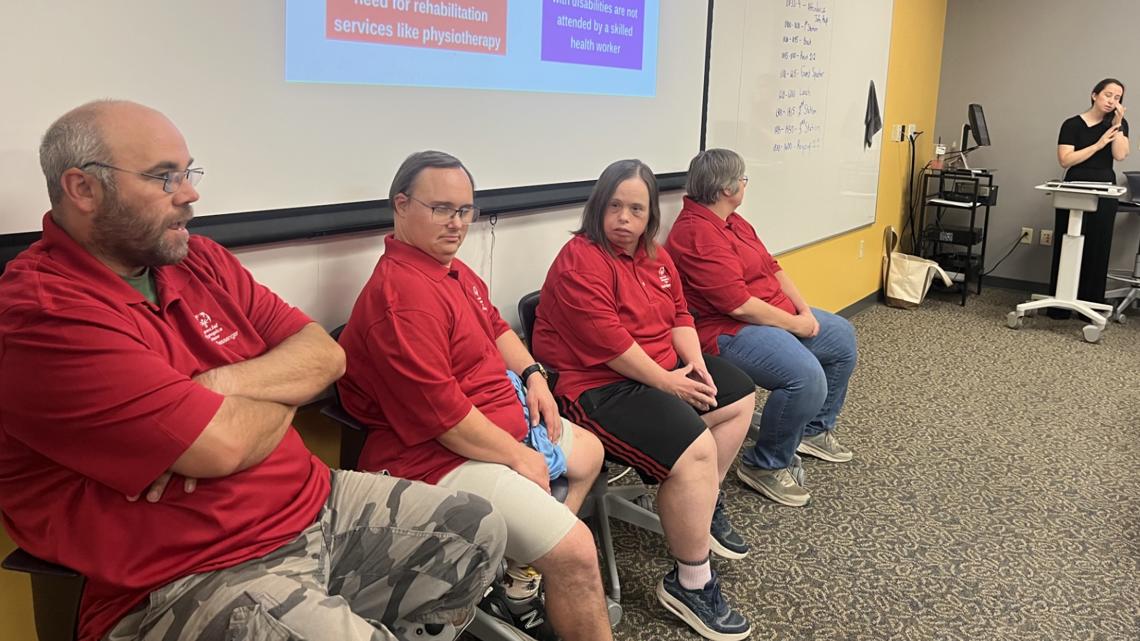
Della and three other Special Olympians—Ruthie Lowell, Trent Paradis, and Brandon Mullen—spoke with first-year nursing students at the Maine College of Health Professions in Lewiston, sharing their experiences with getting healthcare.
Grace Stults is the Health and Wellness Director for Special Olympics Maine. She says medical professionals often talk to a caregiver or guardian instead of the athlete. Sometimes, behaviors that are caused by a medical issue are mistaken for a disability.
“They may not be able to express things like you or me would. It gets sidelined to its part of down syndrome, its autism, intellectual disability, when in reality there is so much more going on with them, Stults said.
Mariann Gowell is a nursing faculty member at MCHP, and she has a grandson with autism.
Gowell says hearing from the athletes is a powerful reminder for the class that every patient has a voice.
“I want nurses to advocate for their patients, assess and think of things a little differently, and not associate it with their disability,” Gowell explained.
First-year nursing student Tory Wentworth has an adult son who experienced developmental delays in school.
“We need to slow things down and listen, not to say the first thing that comes to mind to the person that is with them, but treat them like a human being,” Wentworth said.
RELATED: Athletes shine through the rain at Special Olympics Maine Summer Games
Special Olympics serves over 5,200 athletes across the state. The goal is to make Health Messenger training accessible to all individuals entering the medical field in Maine.
“You can’t select your patients. You have to treat everyone and provide them with quality health care,” Stults said.
Special Olympics Maine also provides free health screenings for athletes and support connecting with medical providers.
For more local stories continue with us on our NEWS CENTER Maine+ streaming app.
For the latest breaking news, weather, and traffic alerts, download the NEWS CENTER Maine mobile app.
link
More Stories
Preparing a “Landing Pad”: Mitigating OBBBA’s Harms to the Medicaid Safety Net
Adults with Intellectual and Developmental Disabilities Face Critical Mental Health Care Gaps, New Study Finds
Alabama Neurodevelopment Center aims to boost mental health resources in Birmingham, the state