



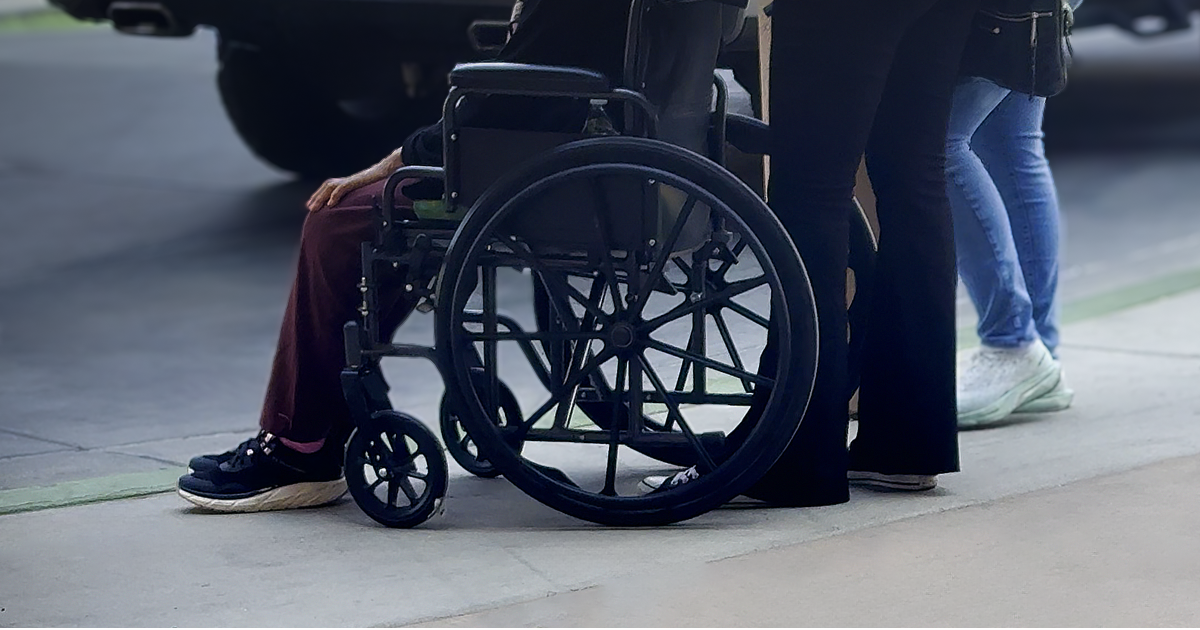
Accessing health care can be a complex process, from finding the right provider all the way to receiving treatment and making health-focused lifestyle changes. For patients with a disability, this process can be even more challenging.
Fabián Armijo’s team helps patients overcome those challenges every day, so nothing stands between a person and the care they need.
Armijo is the executive director for Community Engagement and Language Access at The University of New Mexico Hospital. He said UNM Health strives to make health care accessible, all the while understanding that listening to patients’ feedback and making improvements is extremely important.
“Our goal with assisting patients with disabilities is that they have as close of an experience as anybody else,” he said. “It’s important to us to think about and consider how people navigate the world, whether it’s in a wheelchair, with a cane or prosthetic limbs.”
Armijo said UNM Health accommodates all patients with disabilities.
He recommends that patients with a disability communicate their needs to the scheduler when they call to make an appointment. This step will help staff and providers prepare ahead of time to make sure the patient can comfortably access the care they need.
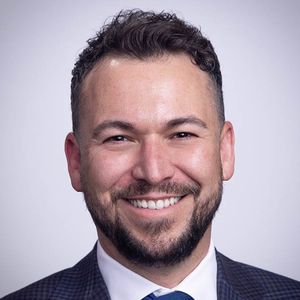
When we think about privilege, we don’t always think about what a privilege it is to be able to hear or to see well, or to go into a space that’s got stairs and you can walk up the stairs.
–Fabián Armijo, Executive Director, Community Engagement & Language Access, UNM Hospital
Even without advance notice, Armijo said UNM Health ensures accessibility in multiple ways.
One accessibility strength of UNM Health is language interpreting services, including American Sign Language (ASL) interpreting for patients who are deaf.
Patients needing an ASL interpreter and who have a scheduled appointment don’t need to provide advance notice of their need for an interpreter, he said. The UNM Health language-access team will automatically plan ahead to provide an ASL interpreter, if possible, either through video or in person.
Other accessibility services UNM Health provides for patients with hearing disabilities are FDA-approved clear masks, which facilitate communication for people who are hard of hearing, and sound amplifiers to increase the volume of spoken communication.
In addition, UNM Health provides wheelchairs and the assistance of patient transporters to help patients get around, Armijo said.
UNM Health facilities are also wheelchair-accessible, which includes access to bathroom stalls, sinks, paper towel dispensers and sharps containers.
When it comes to improving accessibility, Armijo said UNM Health partners with organizations such as the UNM Center for Development and Disability (CDD), the UNM Accessibility Resource Center and the New Mexico Commission for the Deaf and Hard of Hearing.
For example, based on community feedback, UNM Health worked with the CDD and other autism-support advocates to develop “sensory kits” and short videos to help patients with autism navigate their health appointments, he said. Kits include items such as noise-cancelling headphones and fidget toys, and UNM Health is currently testing them at Carrie Tingley Hospital Outpatient Services. Parents and/or patients can request a kit at check-in.
Armijo emphasized that listening to feedback from patients is essential to addressing problems and improving accessibility.
“When we think about privilege, we don’t always think about what a privilege it is to be able to hear or to see well, or to go into a space that has stairs and you can walk up the stairs,” he said.
There is much to learn from the first-hand experiences of others, and what some may need that others do not.
“At UNM, we’re committed to learning more, to trying every single day to be better, to listen to the community,” he said. “Working with the community and learning about where we need to improve is helpful. Knowing where we need to improve is such a gift that the community gives us because we can start working on it, and that makes me feel really good.”
He invites patients to email feedback to him directly at [email protected], or call UNM Health Patient Relations at (505) 272-2121. Armijo said he and UNM Health’s patient advocates listen to feedback and share it with staff, providers and leaders, then work to address problems.
Armijo added that he is training to become an Americans with Disabilities Act coordinator for UNM Health.
“There are so many people who want to make things better,” he said. “I have a lot of support from both clinical and non-clinical people in leadership and at the staff level. It’s fantastic. It’s a lot of fun. We’ve got the support, and now we’ve just got to keep on working to make things better.”
Phone: (505) 272-2121
Hours: Monday–Friday, 8:00AM to 4:30PM
Banner and Thumbnail Photo Credit: Tamara Lopez
link
More Stories
Preparing a “Landing Pad”: Mitigating OBBBA’s Harms to the Medicaid Safety Net
Adults with Intellectual and Developmental Disabilities Face Critical Mental Health Care Gaps, New Study Finds
Alabama Neurodevelopment Center aims to boost mental health resources in Birmingham, the state