




6-minute read
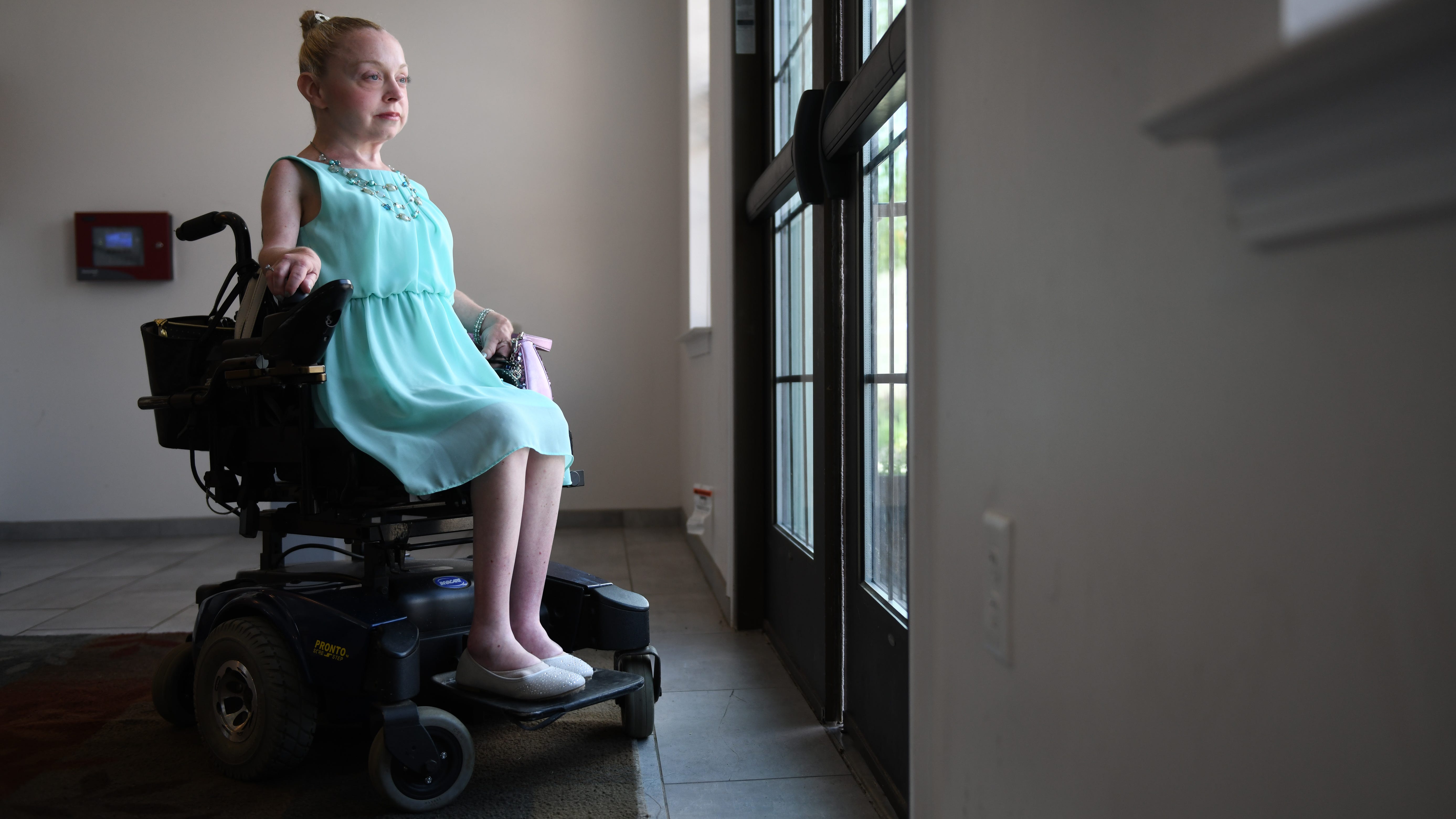

Hear as NJ resident talks about discrimination in health care settings
Kelly Boyd of Hamilton Township uses a wheelchair due to having severe rheumatoid arthritis and has experienced discrimination in health care settings
- A World Health Organization report found that some people with disabilities die up to 20 years earlier than those without.
- Many individuals with disabilities report that doctors do not listen carefully, show respect or spend enough time with them.
- Advocates and some New Jersey hospitals are working to improve care by training staff and removing physical barriers in offices.
Kelly Boyd, 45, remembers a trip to a Mercer County OB/GYN not for what the doctor did, but for what she said.
“She asked me — twice — if I was a dwarf,” Boyd said.
The doctor hadn’t read her chart, which noted her diagnosis of rheumatoid arthritis, a condition she has battled since infancy. The Hamilton Township resident, who uses a wheelchair and is 4-foot-9, said the question was offensive — and irrelevant.
“I never went back due to her bedside manner,” she said.
That wasn’t the only indignity Boyd has experienced at the hands of a New Jersey health care provider. At one medical practice that claimed to have accessible offices, she was met with a tall curb she couldn’t navigate. The receptionist visible through the window didn’t acknowledge her struggling at the door. And at routine appointments, nurses often have tried to skip weighing her.
Story continues below photo gallery.
“They assume I can’t get out of my wheelchair,” Boyd said — even though tracking her low weight is “essential” to her care.
Across New Jersey and the rest of the country, people with disabilities describe health care experiences like Boyd’s all too frequently. They routinely face physical barriers, dismissive attitudes, rushed appointments and missed diagnoses that non-disabled patients usually don’t have to deal with.
The consequences can be enormous — and sometimes deadly. People with disabilities have a higher risk of serious illness and premature death due in part to a health care system that creates “avoidable, unfair and unjust factors,” said a 2022 World Health Organization report.
The WHO report found that some people with disabilities die up to 20 years earlier than those without. They also have twice the risk of developing asthma, diabetes, stroke and obesity. While some of that is attributed to underlying conditions, the report said an equal factor is a lack of access to quality health care and practitioners able to treat patients who may struggle to communicate or need extra time.
For months, NorthJersey.com has investigated the extra barriers people with disabilities face to get proper care in New Jersey, with frustrating and sometimes fatal results. Among our findings:
- People with communication disabilities often struggle to have their symptoms believed — or even understood — by doctors. Pain and discomfort may be misattributed to a person’s baseline condition, behavior or mental state.
- Structural forces can undermine care for people with disabilities. Despite its health care excellence, New Jersey has long had the lowest percentage of doctors who accept Medicaid, the government insurance program for low-income patients that also covers 200,000 state residents with disabilities. That creates a huge gap in care, especially for developmentally and intellectually disabled children who age out of their parents’ private insurance coverage.
- With the aid of disability advocates, some New Jersey hospitals and their affiliated physician offices have begun to make changes — from listing specific tactics for better communication on a person’s chart to removing physical barriers in offices and spending extra time with patients who need it. The last item is no small effort in a health care system where revenue goals are often predicated on speed and volume.
- Despite signs of change, problems persist. Thirty-five years after the Americans with Disabilities Act passed, many health care offices remain inaccessible, with narrow doors, exam tables out of reach and stairs blocking entry. Boyd said she still has problems getting weighed accurately during medical appointments because of a lack of scales that can accommodate a wheelchair.
- Emergency rooms and urgent care centers are often unprepared to meet the needs of developmentally disabled patients — especially in high-stress situations where time is tight and communication is difficult.
This story is the first in NorthJersey.com’s multipart series Hurdles to Health Care, which examines the health care system through the lens of disability. In the coming weeks, installments will explore training gaps in medical education, Medicaid’s role in limiting access, billing codes that block care and the deadly consequences of neglect.
Parents and advocates say a large portion of New Jersey medical providers lack the training to appropriately treat these patients with the care, dignity and expertise to achieve good outcomes. Educators at some of New Jersey’s top medical schools say the disparities in care are significant. They are training the next generation of doctors, nurses and other health care professionals with the tools they will need to narrow the gap.
For too many with disabilities, routine care often becomes a gantlet of assumptions and failures.
Boyd now helps lead training workshops for health professionals, bringing together people with diverse disabilities to share stories like hers. But she says teaching individuals isn’t enough.
“Access shouldn’t be a guessing game,” she said. “And it shouldn’t fall on patients alone to make the system work.”
A systemwide problem
Research supports what patients such as Boyd have long said.
In May, Rutgers University faculty members analyzed a national survey of more than 20,000 adults and found that those with disabilities consistently reported worse health care experiences. The study was published in the journal Health Services Research.
Patients with disabilities rated providers lower on attentiveness, respect, time spent and how clearly information was explained. Those with both physical and cognitive disabilities fared the worst.
Story continues below chart.
“Our findings highlight the need for disability‑competent and affirming health care,” said lead author Elizabeth Stone of Rutgers’ Center for Health Services Research. “This is especially critical at a time when policies and initiatives impacting people with disabilities are coming under attack.”
Stone was referring to Section 504 of the Rehabilitation Act, the U.S. law that prohibits discrimination in federally funded programs. The Biden administration updated it in 2024 to strengthen protections in health care, prompting lawsuits from 17 states. New Jersey was not among them. They have since dropped the attempt to overturn Section 504, but the case is still pending as states continue to challenge some of the updates, according to the Disability Rights Education and Defense Fund.
But the stakes are far more than legal.
‘Giving them specific instructions is the best strategy’
For Hackensack’s Arlene Romoff, who is deaf and uses cochlear implants, basic communication at the doctor’s office requires constant self-advocacy.
“I inform them that I have a hearing loss and that makes it difficult to hear my name being called in a waiting room,” she said. “So I make sure I ask them to get my attention.”
She also has to remind doctors and nurses to face her directly and explain that masks interfere with lip reading.
“Giving them specific instructions is the best strategy for me,” Romoff said. But she wishes she didn’t always have to educate her providers.
Autism and access
People on the autism spectrum often face steep barriers to care — even as their medical needs grow more complex, said Cassidy Grom, communications director for the advocacy group Autism New Jersey.
They are more likely to experience seizure disorders, gastrointestinal conditions and metabolic issues such as hypertension or diabetes. Even getting through the door can be difficult.
“People may not act in ways doctors are used to,” Grom said, “and that can lead to confusion or avoidance.”
Even when providers want to help, insurance constraints can get in the way. Appointments that require more time or flexibility are hard to accommodate under existing billing codes.
To push for change, Autism New Jersey launched a health care consortium of providers across the state. They promote autism-friendly practices, such as allowing patients to wait in their cars until an appointment begins, offering sensory-friendly entrances and documenting communication needs in charts.
Grom said the real fix must go deeper.
“People can’t rely on individual acts of compassion,” she said. “Change needs to be systemic.”
For Boyd, the most urgent need is simple dignity.
“I’m not asking for anything outrageous,” she said. “Just to be seen, listened to and treated like anyone else.”
Coming Thursday: NJ’s health system has a huge gap in care for people with disabilities on Medicaid
link
More Stories
Preparing a “Landing Pad”: Mitigating OBBBA’s Harms to the Medicaid Safety Net
Adults with Intellectual and Developmental Disabilities Face Critical Mental Health Care Gaps, New Study Finds
Alabama Neurodevelopment Center aims to boost mental health resources in Birmingham, the state