


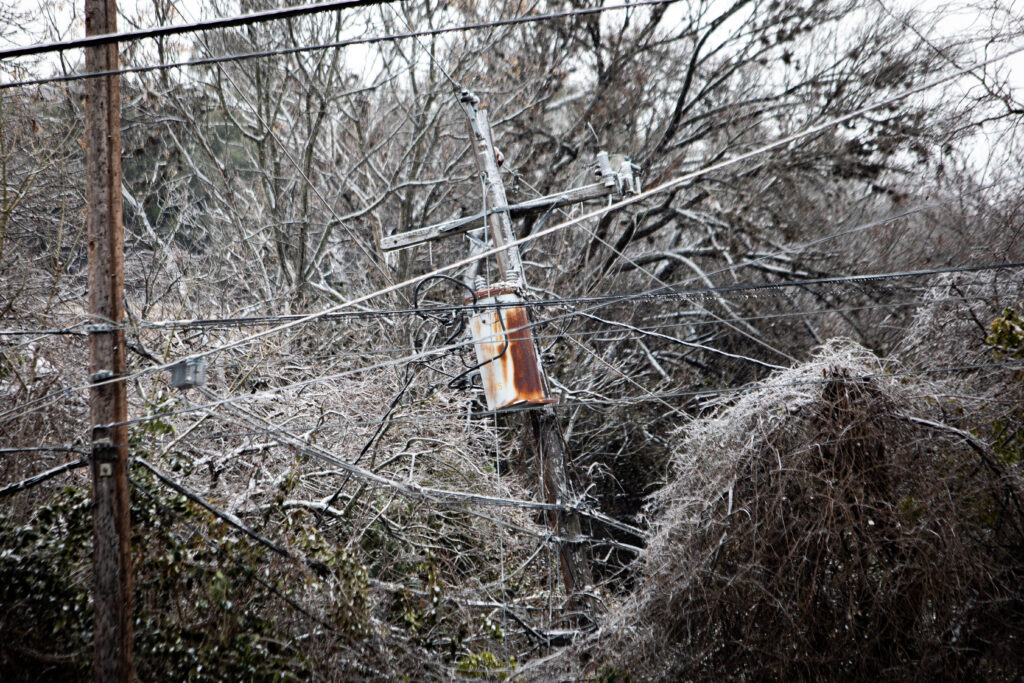
In 2021, Texas experienced a winter storm that shut down much of the state’s power grid for a week, leaving millions of people without heat and electricity. Hundreds lost their lives.
For Texans with disabilities, the storm offered extra challenges, and exposed the limitations of the state’s emergency preparedness system.
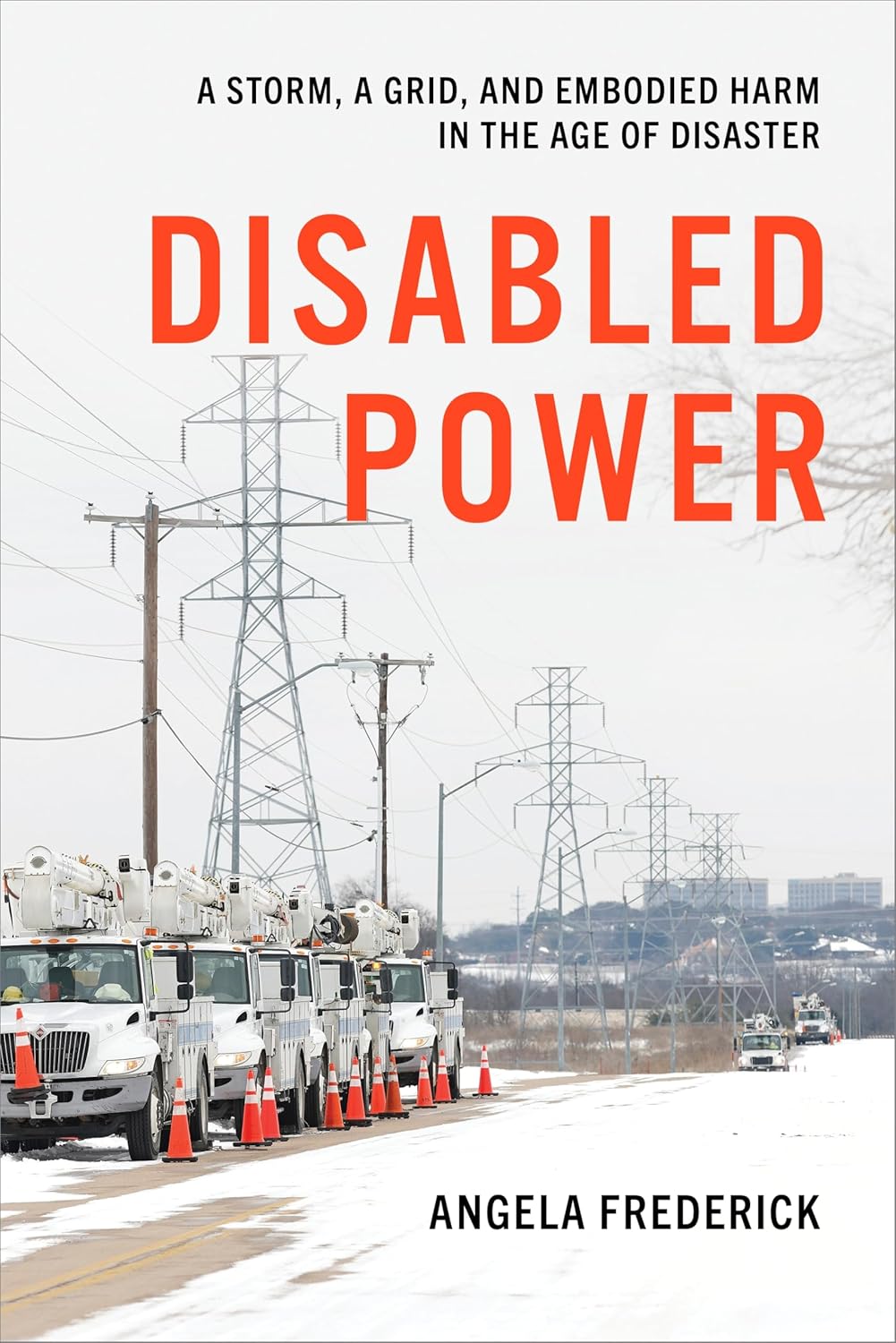
Angela Frederick’s new book, “Disabled Power: A Storm, a Grid and Embodied Harm in the Age og Disaster“ features interviews with 58 Texans about how disability impacted them during the winter storm, and how their own resilience kept them going.
Frederick says some disabilities make it difficult to take measures to protect oneself from the impacts of extreme temperatures. Listen to the interview above or read the transcript below.
This transcript has been edited lightly for clarity:
NYU Press
Texas Standard: You identified a lack of home heating as a major cause of danger during the storm. Can you talk about how the lack of heat specifically impacted people with disabilities during the storms?
Angela Frederick: Yes, and I think millions of Texans still carry the trauma of having to endure for days in their own freezing homes during Winter Storm Uri. But for Texans with disabilities and chronic health conditions, there were extra layers of danger involved in enduring without heat.
So I’ll talk about three different groups here. So first, people with chronic health conditions are often very susceptible to flare-ups of their conditions in extreme temperatures – either extreme heat or extreme cold. So people with MS, for example – people with chronic health conditions – they experience very high levels of physical pain in their freezing homes, and some lost the ability to walk and became bedridden in their homes during this disaster.
Another group are people with spinal cord injuries. For this group, they often have difficulty regulating their own body temperatures, and some can be thrown very quickly into life-threatening medical conditions with even small changes in temperature. So this group were really in life-threatening situations.
And then the third group – so people with disabilities are far more likely to be low income. And this places them in housing that rendered them even more vulnerable during the power outages. So they are more likely to be renters, and they’re more likely to live in older homes that are poorly weatherized.
And so for low-income Texans with disabilities, they were managing their disabilities and chronic health conditions in homes that afforded them far fewer hours of warmth and safety than people with disabilities in middle and upper-class neighborhoods.
Well, you mentioned power outages. Those were also dangerous for people who rely on medical equipment. Tell us about that – not just during the storm, but whenever these happen.
So most people with disabilities and chronic health conditions could be classified as “power-vulnerable,” meaning they experience extra challenges during long-duration power outages. So making sure that their medicine is kept at safe temperatures, for example.
But there’s a segment of the disability community who are power-dependent. And this group depends on electric-powered medical equipment for their very survival and movement: So for breathing, for getting in and out of their beds, for adjusting their beds, for powering their wheelchairs that offer them movement. And so for this particular group, losing power for days on end was extraordinarily challenging and even life-threatening.
So I interviewed someone, for example, who I will call Grace. And Grace only has 20% use of her lungs and she was extraordinarily prepared for a long-duration power outage, but when she got into multiple days of having gone without power for her ventilator, she finally got down to the last backup battery for the ventilator that keeps her alive.
So for this group in particular, the Texas power crisis was a life-threatening ordeal.
You spoke with disabled people, a variety of them, but some were unhoused during the storm and the people who work with them also – you interviewed them.
How did they fare? How did the unhoused people fare and were those services, that are so desperately needed, available?
Among our unhoused neighbors, many have both psychiatric disabilities and even physical disabilities. And so this question is a very important question for the disability community.
And I interviewed someone who I’ll call Rita, who was unhoused at the time of the winter storm. And she endured the entirety of the disaster under a tent out in the elements.
And I also interviewed people who were involved in providing services for the unhoused community in Texas during this disaster. And this is really a mixed story because it cannot be overstated how much community advocates and regular everyday community members stepped up to assist the unhoused community. They often went out into dangerous elements. They left their own personal family crises at home to assist. And so this collective care just cannot be overstated.
But at the same time, there were huge gaps in our response systems. There were stories of chaos in certain warming shelters and the inability to meet the needs of people who were in acute mental health crises, for example.
And one of the interesting things about the story of disability and disaster is not just that disabled people are more vulnerable in disasters, but that disasters themselves create new disabilities. And we saw this in the unhoused Texas community.
And many people who survived the disaster out in the elements experienced amputations due to severe frostbite. And so dozens of people acquired new permanent disabilities, and so they still bear the scars of the gaps in our response systems.
» GET MORE NEWS FROM AROUND THE STATE: Sign up for Texas Standard’s weekly newsletters
Also lack of access to a vehicle or transportation was another issue for some of the people you spoke with. That includes not being able to use a car to stay warm.
What did you hear about transportation issues during the storm?
The lack of access to transportation was the biggest issue for blind Texans I interviewed.
So blind Texans navigate their daily lives using public transportation and all of these systems shut down. They couldn’t access buses. They couldn’t access rideshare platforms. And so this group, in particular, had extreme difficulty evacuating their homes.
In addition, we heard many, many stories from Texans and people will probably remember themselves retreating out periodically to their vehicles to warm up. But when you’re blind and you live alone or you live with another blind person, this group did not have that option. They did not have that backup warmth of their vehicle.
And finally, transportation challenges extended for the blind community, far after the temperatures warmed, as people were still struggling without water. And many of the water distribution hubs are drive-thru only. And so if you think about being blind and relying on buses and rideshare platforms, well, it’s not feasible to think about taking a bus to a water distribution hub and lugging heavy jugs of water home with you and an Uber driver isn’t going to sit in line with you for hours to get water.
And so this really left people going without water for longer periods of time than their sighted neighbors or really having to rely on neighbors and friends for assistance. And by the way, these are the exact same issues that the blind community struggled with COVID drive-thru testing.
link
More Stories
Preparing a “Landing Pad”: Mitigating OBBBA’s Harms to the Medicaid Safety Net
Adults with Intellectual and Developmental Disabilities Face Critical Mental Health Care Gaps, New Study Finds
Alabama Neurodevelopment Center aims to boost mental health resources in Birmingham, the state