


The University of Rochester Medical Center (URMC) has announced the appointment of Juliet Emamaullee, MD, PhD, as the inaugural Research Director of the Transplant Institute, effective January 1, 2026. A nationally recognized surgeon-scientist, Emamaullee will lead efforts to expand transplant research, strengthen clinical trials, and accelerate the translation of discovery science into improved patient care.
A new leadership role to advance transplant research
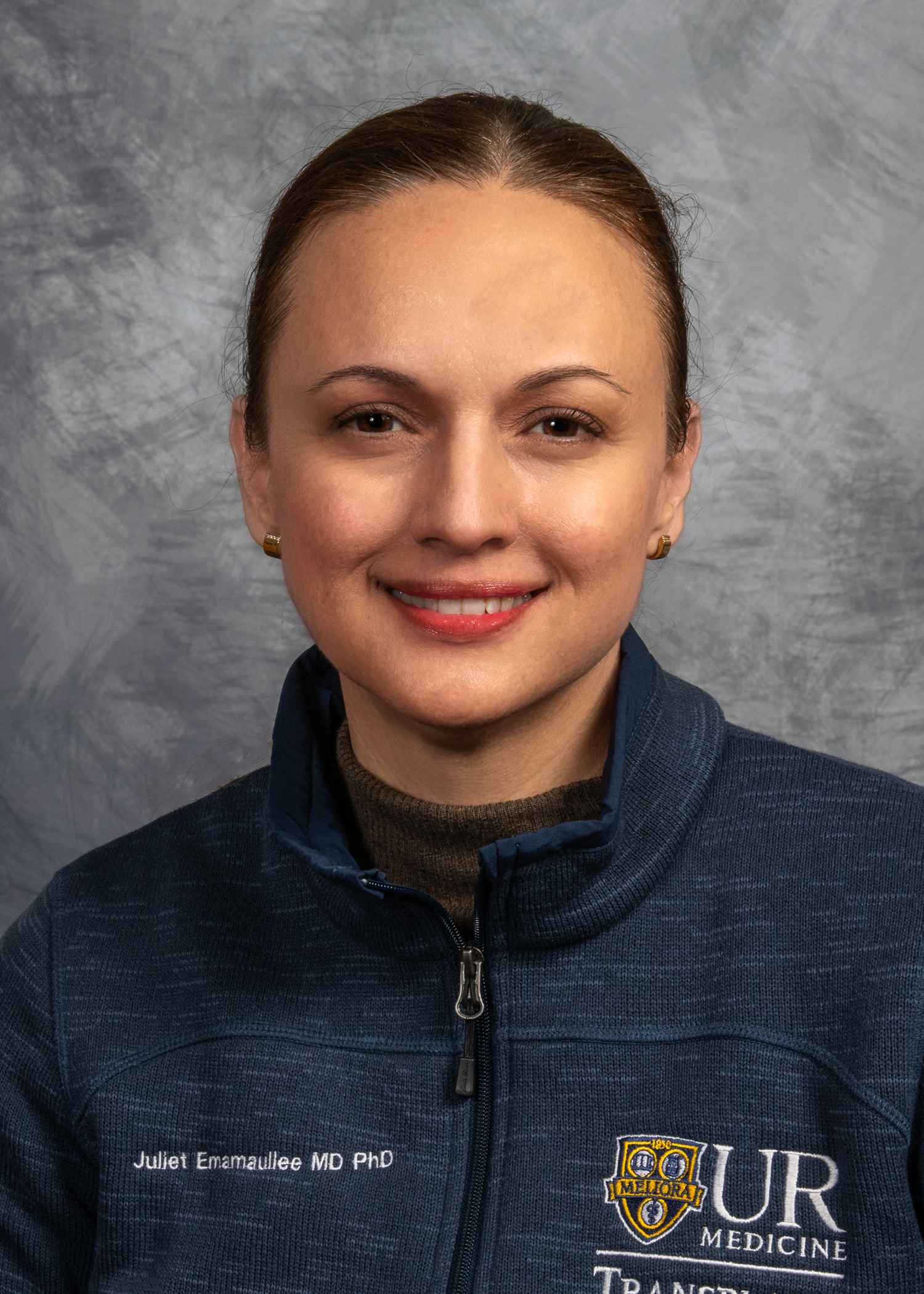
The creation of this role reflects the rapid growth of URMC’s transplant programs and the launch of the Transplant Institute as a unifying structure for clinical care, research, and education. As Research Director, Emamaullee will work closely with Transplant Institute leadership, surgical and medical teams, researchers across the Wilmot Cancer Institute and the Institute for Immunological Sciences, as well as external collaborators, to develop and execute a strategic plan to expand and strengthen transplant research.
Her responsibilities include overseeing clinical and translational research projects, expanding the transplant clinical trials portfolio, administering pilot funding, ensuring regulatory compliance, and mentoring faculty, residents, fellows, and trainees. She will also organize research seminars and grant-development initiatives to strengthen the Department of Surgery’s research enterprise.
Integrating research with expanding clinical programs
“Dr. Emamaullee brings a rare combination of scientific rigor, translational vision, and experience building research programs alongside busy clinical services,” said Roberto Hernandez-Alejandro, MD, Chief of the Division of Transplantation. “Transplant is a team effort, and her track record of mentorship, collaboration, and funding success will help elevate everyone around her. As our clinical services continue to expand, including transplant oncology and living donor programs, her leadership will be essential to turning innovation into measurable improvements in patient outcomes.”
URMC has continued to broaden its transplant services and recruit new clinical leaders to meet the growing demand for complex transplant care. Institute leadership has emphasized that research growth must advance in parallel with clinical excellence, supported by dedicated infrastructure and resources.
Why Rochester: alignment, collaboration, and opportunity
Emamaullee said URMC’s commitment to integrating clinical care with translational science was a key factor in her decision to join the institution.
“I was drawn to Rochester because of the strength of the clinical transplant program and the clear investment in research and collaboration,” she said. “There is a unique opportunity here—across the Transplant Institute, the Wilmot Cancer Institute, and the Institute for Immunological Sciences—to bring modern immunology and precision approaches directly into transplant care. That level of alignment is rare.”
She noted that few institutions are positioned to support near-term, patient-focused translational research in transplantation at this scale and level of integration.
A research vision focused on precision and innovation
Emamaullee comes to Rochester from the Keck School of Medicine of the University of Southern California, where she served as Associate Chief, Division of Clinical Research, Department of Surgery. She completed her PhD and MD degrees at the University of Alberta, followed by residency training in general surgery at Emory University and a fellowship in abdominal organ transplant/HPB surgery at the University of Alberta.
Her research focuses on leveraging single-cell and spatial immunology technologies to enhance understanding of immune-mediated injury, identify biomarkers, and develop targeted immunosuppression strategies. Her work has broad relevance across adult and pediatric transplantation, transplant oncology, living donor outcomes, and emerging areas, including xenotransplantation.
“Despite enormous advances in immunology, much of transplant care still relies on outdated tools,” Emamaullee said. “There is tremendous opportunity to personalize treatment, improve diagnostics, and bring the same kind of innovation that has transformed cancer care into transplantation. Rochester has the clinical volume, patient diversity, and infrastructure to be at the forefront of that change.”
Institutional support and cross-disciplinary collaboration
Ryan Fields, MD, Chair of the Department of Surgery, called the appointment a milestone for the Transplant Institute and the Department of Surgery. “Dr. Emamaullee’s recruitment signals our commitment to building a nationally competitive transplant research enterprise. Her leadership will strengthen our clinical trials portfolio, mentorship culture, and ability to translate discovery into practice.”
Tanya Mayadas, PhD, Director of the University of Rochester Institute for Immunological Sciences and Chair of Microbiology and Immunology, added: “The bridge between cutting-edge immunology and clinical transplantation is exactly what the Institute for Immunological Sciences was created to support. Dr. Emamaullee’s expertise in systems immunology and spatial profiling will create powerful collaborations across immunology, oncology, and surgery that have immediate potential to change patient care.”
“With strong leadership, a collaborative culture, and shared vision, URMC is poised for transformative growth in transplant care and research,” Emamaullee said. “I’m excited to be part of a team that is committed to pushing the field forward and improving the lives of our patients.”
link
More Stories
McConnell secures $2.6B in federal funding for Kentucky, boosting Louisville redevelopment and research
North America Pre-clinical Scientific Research Medical Device Market Report 2033
75 years ago, her cells were taken without consent. Today her family honors her legacy to make sure it never happens again