



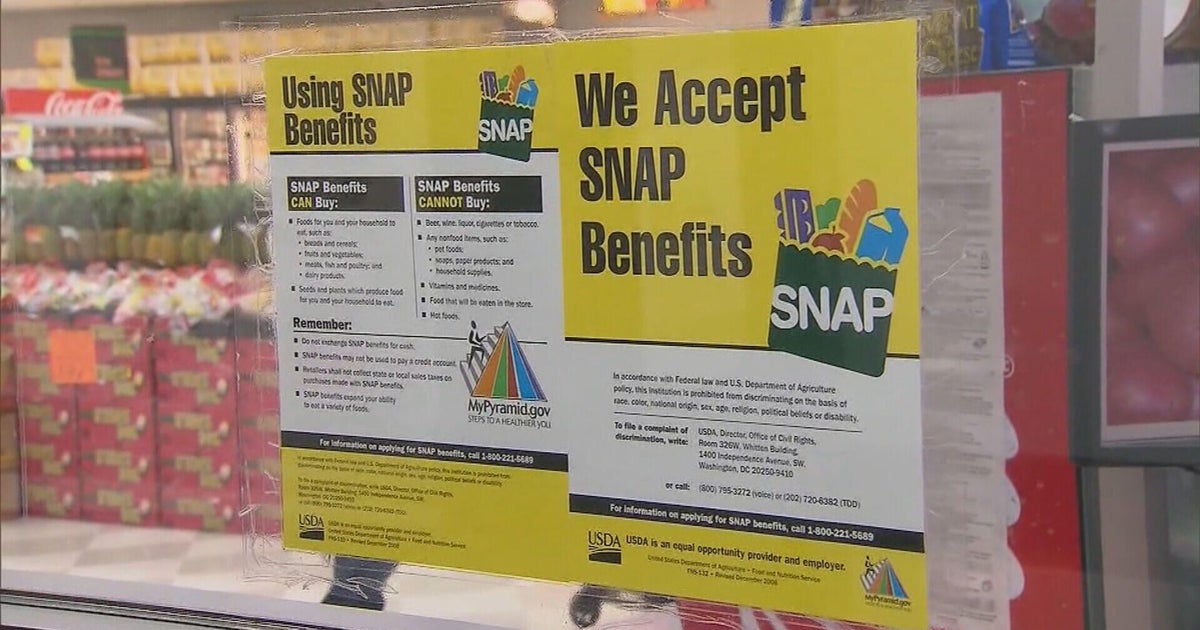
As the likelihood of going without SNAP benefits rises, people who depend on them are trying to figure out how to pay for food and other bills.
“I think it’s absolutely horrific what they’re doing. People with disabilities. Older Coloradoans. Those are the people they’re hitting,” said 66-year-old Francesca Maes. Maes deals with a long list of difficult health issues, from non-alcoholic liver disease and diabetes to lifelong struggles with issues like mental health and mobility.
CBS 
“They mean my sustainability to function through life,” said Maes of the Supplemental Nutritional Assistance Program, known as SNAP.
She lives in a home in Thornton that her mother left her. She is always scraping by. Social Security disability payments total about $800 a month. Francesca’s brother helps keep her in the home, but feeding herself is difficult, and SNAP benefits are crucial.
“You don’t eat steak. You’re lucky to get a hamburger. Usually, like a turkey burger,” said Maes. She has no idea what she’ll do without the benefit. “I use the money that I live on daily to buy my food. And so I’m going to come up short somewhere.”
Among the 600,000 Coloradans who receive SNAP benefits, about 50% are children. About 10% are seniors, and 15% are people with disabilities. Sometimes they are people with serious medical issues and cognitive disabilities. The poverty rate among people with disabilities is about three times that of the wider population.
“I’m extremely worried. This is very, very scary, because it’s not just this. We are looking at Medicaid cuts,” said Julie Reiskin, co-executive director of the Colorado Cross Disability Coalition.
“Voucher programs have been universally popular on both sides of the political aisle, because it says, we’re going to give a hand up to people. It’s only for people who are very, very low-income. I think when we talk about the poverty level, it’s important to understand just how poor that is,” said Reiskin.
CBS 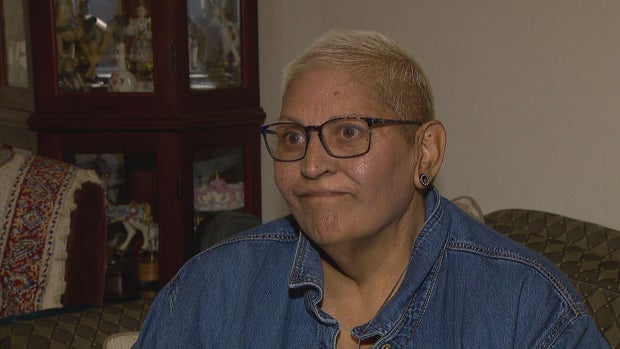
At that level, some are only one missed payment away from homelessness.
“If you look outside anywhere in Denver, you know, you see homeless people, and if you pay attention, you’ll see more and more people out there with visible disabilities. You’ll see a lot of walkers and wheelchairs, certainly a lot of people with hidden disabilities, chronic illnesses.”
It is a shift she believes, in a basic view of others.
“A loss of, you know, caring for your neighbor, you know, loving thy neighbor, caring for your neighbor. We cannot charity our way out of things that really are and should be a government responsibility.” All Colorado residents, she notes, use government services: roads, schools, and law enforcement. But needs vary. Sometimes people don’t need them. Other times they do.
Maes is unsure what she will do after Saturday if benefits are withheld. Food banks may have food to help, if she can get there. She does not drive.
“You have to have a car to get to a food bank. Or you have to call an Uber to drop you off. And you have to stand there with your box for Uber to pick you up or a cab.”
She worries about what lawmakers are doing and says she fears for the future of the country.
“They’re disregarding us as people by taking away our food. Even dogs eat. The ants eat. The roaches eat. But we’re not going to eat. What’s wrong with this picture, people?”
link
More Stories
Preparing a “Landing Pad”: Mitigating OBBBA’s Harms to the Medicaid Safety Net
Adults with Intellectual and Developmental Disabilities Face Critical Mental Health Care Gaps, New Study Finds
Alabama Neurodevelopment Center aims to boost mental health resources in Birmingham, the state