


From Delco to Chesco and Montco to Bucks, what about life in Philly’s suburbs do you want WHYY News to cover? Let us know!
The Historic Yellow Springs campus in Chester Springs, Pennsylvania, has a monument to the Revolutionary War’s greatest threat.
Disease was a far greater killer than combat. An estimated 6,800 American soldiers were killed in action, but 17,000 died from afflictions including typhoid, dysentery, smallpox and the flu.
“Smallpox has made great havoc among them,” wrote Joseph Hewes, a signer of the Declaration of Independence, upon the retreat of the Continental Northern Army from Quebec.
“The Army has melted away,” he wrote in July 1776. “As if the Destroying Angel had been sent on purpose to demolish them.”
A revolution in medical standards
Sick and wounded soldiers were often cared for in ad hoc field hospitals set up in churches and private homes. But these houses of healing often became death traps of contagion.
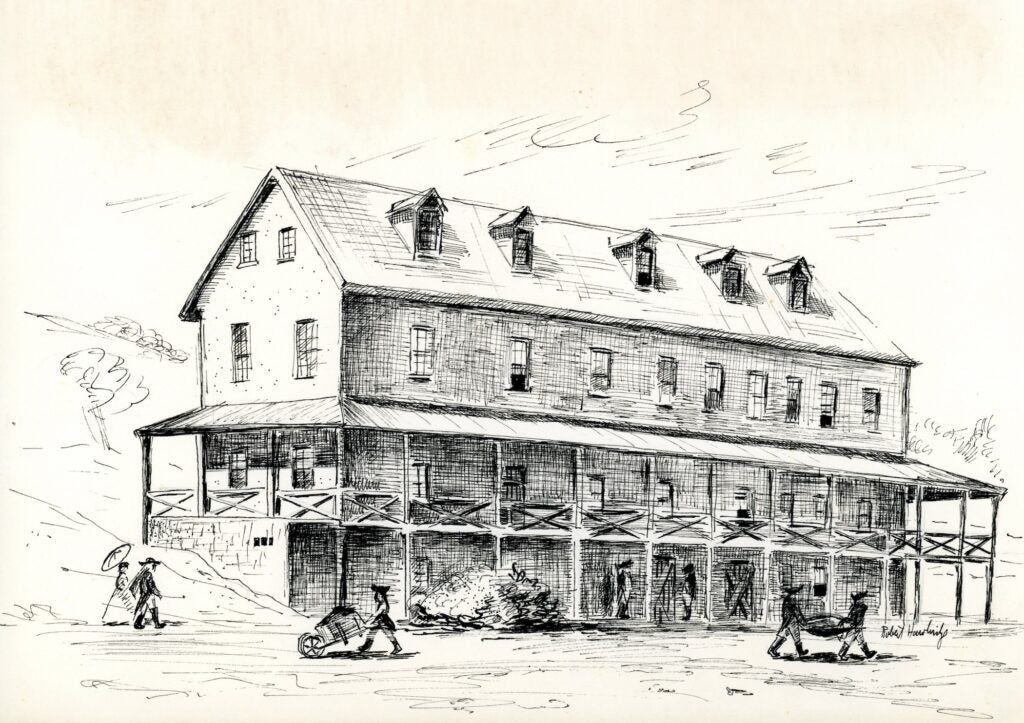
When Gen. George Washington set up a winter encampment at Valley Forge in 1777, he tried something different. He commissioned the first and only purpose-built Continental Army hospital at Yellow Springs, a few miles away.
Dr. Bodo Otto was put in charge. His approach to disease was radical at the time: cleanliness.
“Medicine was limited, and the budgets were small, but there were things that could be done,” said Chester County historian Sandra Momyer. “That meant serving hot, steamy food so bacteria wasn’t involved. It meant isolating those who were recovering from those who were newly sick. It meant clean clothing and clean bedding. Washing hands at least once a day.”
Momyer said those measures may sound obvious now.
“Those are things that seem very common-sense to us today, but they were critical,” she said. “Going into the war, they had no knowledge of medicine, they had no knowledge of how our body functioned. It was very, very primitive.”
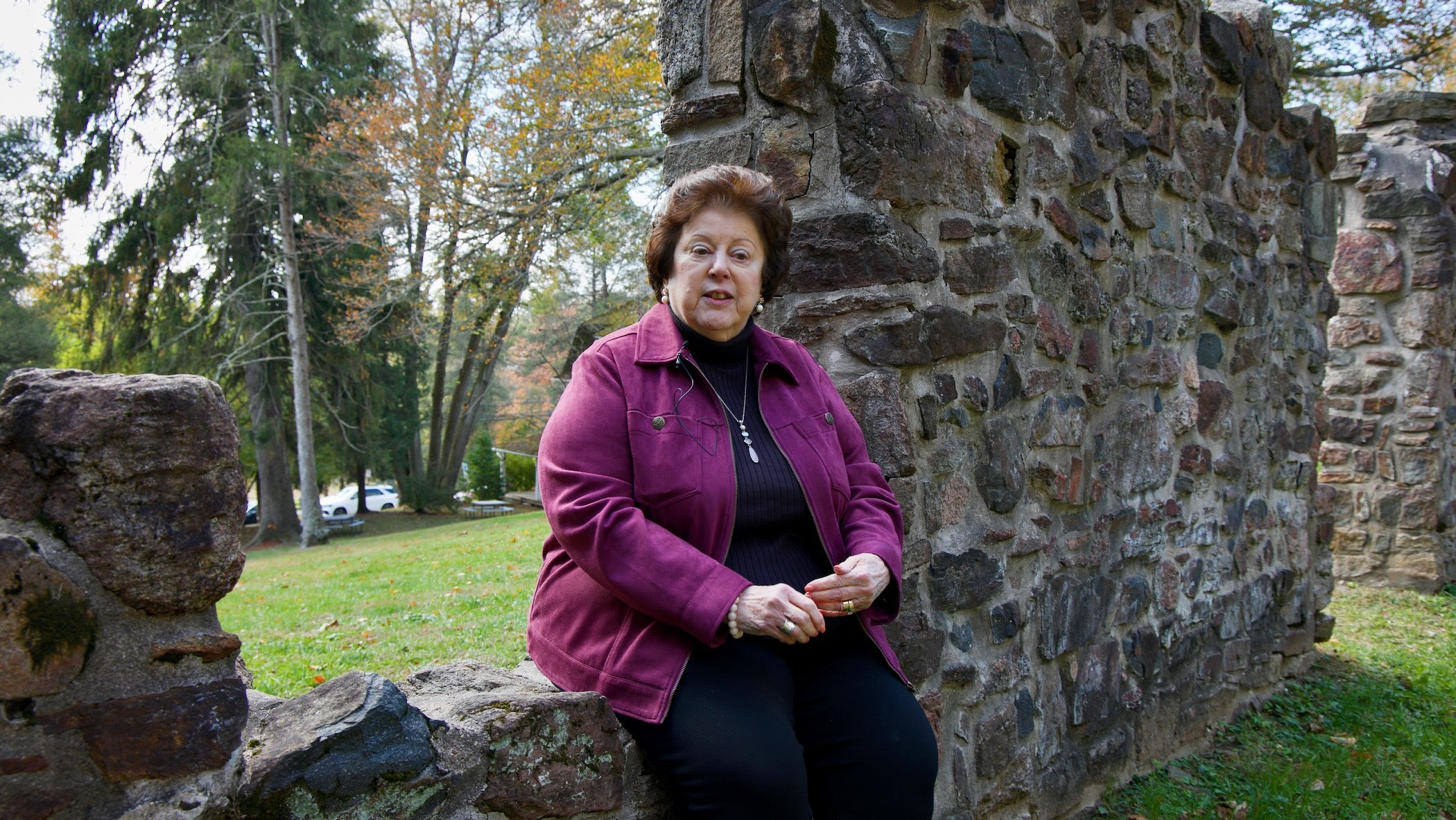
Momyer is the retired, former director of Historic Yellow Springs, a campus of historically significant sites in Chester County dating back about 300 years. The original stone foundation of the 1777 military hospital is still there, preserved as a monument ruin.
There were other buildings used as hospitals during the war, notably in Bethlehem, Lititz and Ephrata. There, the Continental Army usually took over existing buildings, such as barns and churches. Disease ravaged not only those field hospitals but the communities surrounding them as well.
At a hospital in Bethlehem, for example, five soldiers died on the same straw bedding before it was changed, despite suffering from relatively minor ailments, according to a 1964 historical journal.
“When Washington took over the colonial army in 1775, he really had no precedent to go by. There was no knowledge,” Momyer said. “Of the 1,200 doctors that served in the Revolutionary War, only 400 of them had professional training.”
Under Otto’s leadership, the hospital at Yellow Springs separated sick patients from those who were uninfected, incinerated the clothes of dead soldiers rather than allow others to reclaim them, and cleaned bedpans regularly. An extensive herbal garden was planted at the site to make healing tinctures that were distributed to other hospitals in the army system.
Medical knowledge advanced at Yellow Springs by leaps and bounds.
“A lot of medicine that we know today, even in our modern medicine, occurred from military battles,” Momyer said. “When you’re in the field, decisions have to be made in a snap. Doctors discover things when they’re forced to make these rash decisions. That’s what happened here.”
A new professionalism among doctors emerges
Washington was deeply concerned about the health of his soldiers, worried his forces would “smoulder away with sickness” if high-quality medical care was not available everywhere, and quickly.
In a letter to the Continental Congress in February 1777, Washington proposed a system of military hospitals and a network of doctors throughout the colonies, and he urged that those doctors be well paid.
“In determining the sum that is to be allowed to each, you ought to consider that it should be such as will induce gentlemen of character and skill in the profession to step forth, And in some manner be adequate to the practice which they leave at home,” he wrote.
Congress approved a national military medical program with generous pay for doctors, but as the new nation was notoriously short on cash, few doctors were actually paid during the war. When Otto resigned his commission in 1781, Congress issued him a certificate of indebtedness for over $2,000.
For many doctors, money was not the real prize.
“The Revolution is a big moment for the physicians of the early United States because it is their moment to prove themselves as an independent profession,” said Meg Roberts, a post-doctoral fellow at the University of Edinburgh who studies caregiving during the Revolutionary War.
“The revolution was a perfectly timed moment for them to found the nation’s medical hierarchy,” she said.
link
More Stories
Military Health Care in Korea: What You Should Know | Article
USU Research Builds Moral Resilience in Military Healthcare Providers
DVIDS – News – New digital card connects service members to brain health resources in the Military Health System