


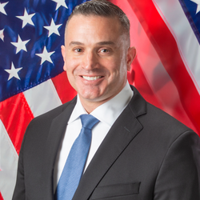
Pennington Biomedical Research Center in Baton Rouge welcomed Dr. Stefan Pasiakos in May as a professor and director of human performance optimization.
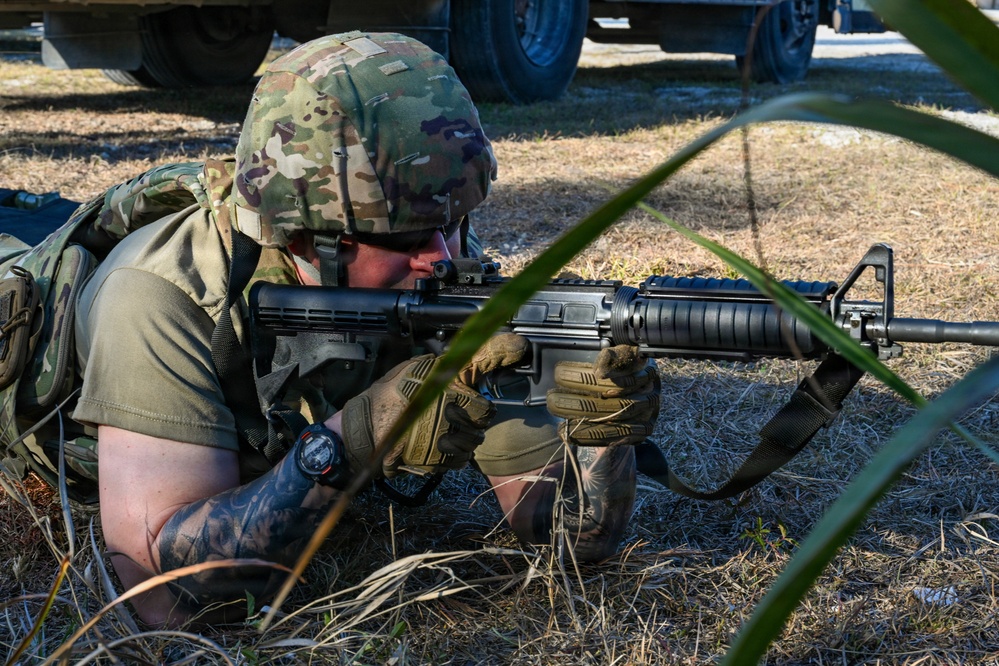
In his work at Pennington, Pasiakos has led research aimed at enhancing human performance across many environments — from the battlefield to deep space.
Pasiakos, an author of over 170 published works, previously worked at the U.S. Army Research Institute of Environmental Medicine and as the director of the National Institutes of Health’s Office of Dietary Supplements.
His research includes optimizing functional capabilities for warfighter resilience, space travel and other projects within the scope of human-performance research.
Pasiakos received his doctorate in nutritional science in 2008 from the University of Connecticut. He also holds master’s and bachelor’s degrees in exercise physiology from Adelphi University and Southern Connecticut State University. He completed a postdoctoral fellowship in the Military Nutrition Division in 2012 as a U.S. Army Medical Service Corps officer.
What brought you into military sciences and the army?
I was always interested in doing research for the military. I became very inspired after 9/11 to give back — to do something in some way that I can actually contribute.
When I was finishing graduate school, I made the decision that I wanted to join the army. I wanted to do science for the army.
I commissioned as an officer right out of graduate school, and I became a postdoctoral fellow at the U.S. Army Research Institute of Environmental Medicine in Massachusetts.
The medical research lab focuses on how service members respond to environmental, physiological and operational stressors, and how they can design evidence-based tools or strategies to offset those decrements that might occur — whether that be during basic training, while they’re living here in the country and training, or if it’s during an actual combat deployment.
We asked ourselves, “How can we use science to optimize their performance, eliminate injury and keep people healthy and ready in the event that they’re called on to do something?”
I was there for almost 16 years. Throughout that time, I had various positions, ending with serving as the chief of the military performance division. That was a large research group of about 90 individuals, where our mission was to identify risk factors for musculoskeletal injury and to develop strategies to prevent injury or to accelerate a service member’s return to duty once they are injured.
Why Pennington?
Pennington approached me in February of this past year and asked if I would be interested in coming to Louisiana. They asked me to both expand my previous research and strengthen — or broaden — the work that Pennington has done to support the Department of Defense for the past 37 years.
We can do this in Baton Rouge by bringing in new disciplines, by integrating the sciences and by focusing on trying to eliminate physiological decline in service members or astronauts operating underneath the most extreme conditions — a real emphasis on both space flight and the military.
That’s where I’m at now. I’m trying to stand up this program and coming back into research, from being a more of a program manager for the past five years at the National Institutes of Health.
What are some specific studies you are researching at Pennington?
We’re working on expanding our relationship with NASA, the Johnson Space Center. We’re looking for ways for Pennington to bring back the ability to do bed rest studies.
Given the focus on going to the moon, the focus on going to Mars, there are a lot of stressors that astronauts face that need to be mitigated in some way.
The bed rest analog gives us the capability for Pennington to do what it does best — to study metabolism. Study skeletal muscle bone adaptations to deconditioning. Study the neurocognitive responses and develop interventions.
We are looking to reestablish the infrastructure here, to really have Pennington serve as the hub for metabolic research, and we hope that comes to fruition.
The other work that we’re doing is continuing to explore the nutritional requirements for service members. One such study is looking at ways that we can use pharmacologic to offset some of the inflammatory responses that happen during extreme operations. That includes operations associated with sleep deprivation, underfeeding or extreme environmental stressors.
Those conditions can cause an inflammatory response that limits the body’s ability to absorb key nutrients, such as iron, and that can reduce performance. We’re doing a study now to look at ways to overcome that.
Another study that we’re putting in for funding is using novel therapeutics, novel compounds, to explore how those can be used to maximize the restorative effects of sleep when you can’t sleep enough.
In special forces, for example, a lot of those missions come with various or limited opportunities to actually sleep, so the body can’t recover optimally if you can’t sleep.
How can we use new strategies, new therapeutics, to actually maximize the body’s response and restorative properties while you can’t sleep enough so you can perform at your best?
We’re looking at brain activity. We’re looking at muscle recovery and cognition.
How is Louisiana so far? And what do you look forward to at Pennington?
I’m from New England. I’ve never really left New England, so this, obviously, was a monster shift. My family and I are happy here in Louisiana.
Personally, I couldn’t be more excited to have the opportunity in front of me. If you’re a federal scientist, typically, as you work through your career, you just move higher and higher into administrative roles. You become so far removed from actual research — doing what you actually were trained to do.
This opportunity here at Pennington has given me the chance to get back to that — to build a program. I will still lead this multidisciplinary program with a lot of scientists, but I’m excited to just get back to the hands-on aspects of science.
Pennington is known for obesity, diabetes, cancer and just general nutrition groundbreaking research, but my focus has always been on human performance under extreme physiological stress. That can be anybody — that can be astronauts, that can be military, that can be first responders.
How can we do science to keep people functioning at their best, no matter the condition? That’s what I hope to do now here at Pennington.
link
More Stories
Military Health Care in Korea: What You Should Know | Article
USU Research Builds Moral Resilience in Military Healthcare Providers
DVIDS – News – New digital card connects service members to brain health resources in the Military Health System